Ideological Architecture
The Engine: Subjective Harm Plus Expert Validation
The VCA does not require objective evidence of harm. It requires a structure.
First, a complainant testifies to a subjective experience of psychological pressure — not at the time, but years later, after working with advocates and therapists trained in trauma-informed frameworks.
Second, an expert sociologist or psychologist validates that experience as coercion — using frameworks like the BITE Model, coercive control theory, or cult identification tools developed outside of peer-reviewed science.
Third, the jury is instructed that the complainant’s subjective perception, validated by expert testimony, is the legal standard of proof.
This is the same structure that operates in:
- Brainwashing prosecutions — where cult identification theory holds that a member’s stated consent was produced by psychological manipulation, making it legally void.
- #MeToo Overreach cases of retroactive withdrawal of consent — where a complainant’s later reinterpretation of a past consensual encounter, validated by trauma-informed expert testimony, is treated as evidence that consent was never meaningfully given.
- Systemic racism doctrine — where structural power imbalance is held to produce harm regardless of individual intent or individual experience, and where expert sociological testimony about conditions substitutes for proof of specific discriminatory acts.
The common thread: coercion and harm are located not in objective acts, but in the conditions that expert witnesses say produced them. The individual’s own account of their experience, including their failure to previously realize their consent was being given under psychological influence, is treated as a symptom, not as evidence.
The VCA shares its underlying logic with the ideology that produced DEI. Both treat power differentials as inherently coercive. Both make subjective harm perception legally dispositive. Both shift the burden onto the accused to disprove an emotional state they cannot access. The difference: DEI was enforced through HR policy. The VCA enforces the same logic with prosecution, prison, and a permanent federal criminal record.
It has one logical endpoint: the state decides which communities have legitimate authority over their members — and which are cults.
The Engine on the Record
The government’s own filings show the engine operating. The prosecution’s expert disclosure in United States v. Cherwitz imported the domestic-violence framework wholesale: “Successful coercive control can lead to a state of psychological entrapment, whereby subjects may find it difficult to leave perpetrators, even if they are not physically restrained” (Government’s Rule 16(a)(1)(G) Notice of Expert Testimony re Dr. Chitra Raghavan, ECF 148, September 16, 2024). In open court, the government stated the theory in its own words: “Dr. Raghavan would testify to the tactics of coercive control… the concept of grooming, for example, love bombing and how those coercive control tactics can make people sometimes react in counterintuitive ways… why someone who undergoes those particular tactics may not leave an abusive situation” (AUSA Nina Gupta, May 21, 2025, Trial Tr. 2647–48). And: “where the statutory requirement… of serious harm that the Government is, obviously, relying on here is psychological harm… there is a need for these concepts to, at least, be explained to the jury by a licensed professional in that area” (AUSA Kayla Bensing, May 21, 2025, Trial Tr. 2656–57). The expert was excluded. The conviction came anyway — through the jury charge.
Who Is Exposed
The Author Has Named the Communities Himself
This is not inference. The framework’s author designates the communities in writing: the New Apostolic Reformation’s largest ministries “fulfill criteria of the BITE model”; Opus Dei is “a Catholic right-wing cultic group”; People of Praise is “a high-demand, cult-like authoritarian group”; the Church of Jesus Christ of Latter-day Saints is “an authoritarian cult” that “meets every criterion” of his model; the MAHA movement is “America’s New Wellness Cult” (August 2025); and his own book is titled The Cult of Trump (Simon & Schuster, 2019). The docket already runs against communities like these — 54 civil cases against religious institutions to date, 25 of them filed in the most recent year (HTLC 2025 Data Update). Some of those cases involve serious allegations that merit prosecution on traditional grounds. The concern here is not which defendants deserved prosecution; it is the breadth of the theory prosecutors and plaintiff attorneys are increasingly using.
The Communities, Documented
Evangelicals & the New Apostolic Reformation
Hassan’s named target, and the movement already in federal court →
Catholics: Opus Dei & People of Praise
BITE evaluations written like diagnoses, and a prosecution in Argentina that mirrors them →
The LDS Church
His longest-running target, and the pipeline built with the biggest ex-Mormon platform on the internet →
Religious communities
Any faith tradition that exercises spiritual authority over members, assigns disciplines, or uses communal consequences to enforce norms is exposed. The doctrine does not distinguish between coercion and conviction.
Political movements
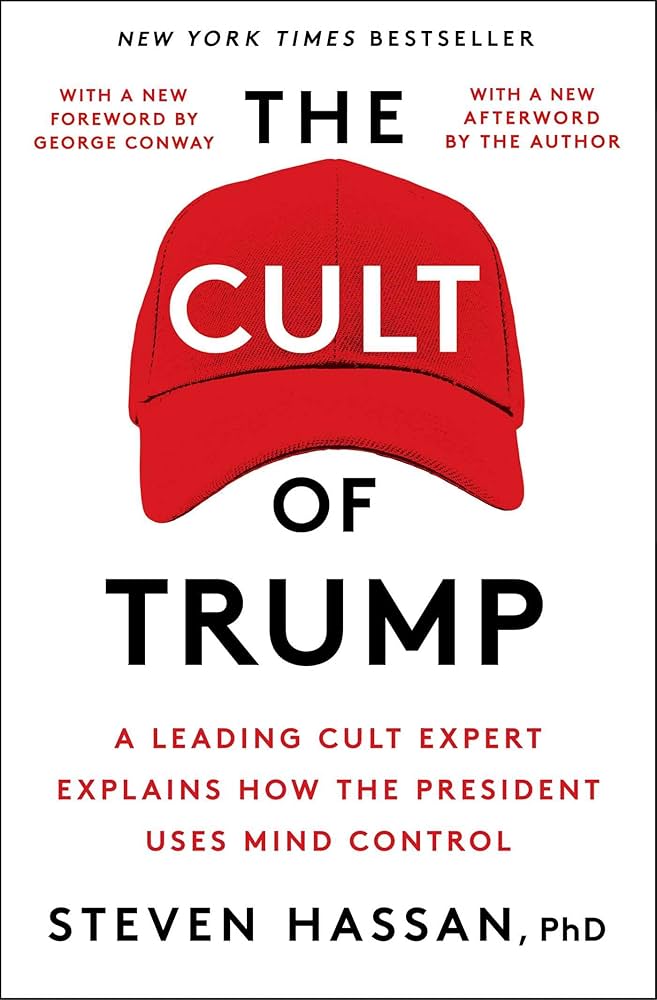
Steven Hassan was not a witness in the OneTaste case; his influence was structural. He was the personal therapist to two of the government's victim-witnesses before charges were filed, and prosecutors pointed the defense toward his own public statements as a reference. The same man applied the BITE Model to the MAGA movement in his book The Cult of Trump (2019). The legal theory that convicted Nicole Daedone and Rachel Cherwitz was developed by the man who wrote that book.
Therapeutic and wellness communities
Any organization that asks members to make significant lifestyle changes, commit time and resources, or subordinate personal preferences to communal goals is within this doctrine's reach.
Federal Confirmation
The Government Said So Itself
Part A — The DOJ Named Religious Organizations as a Trafficking Trend
“Among the most notable labor trafficking trends in recent years is forced labor perpetrated by religious organizations, or perhaps more accurately, organizations claiming to have a religious mission. In cases across the United States, both vulnerable foreign nationals and U.S. citizens were victimized in labor trafficking schemes involving religious organizations.”
The same report named BAPS. The Department closed that temple investigation in September 2025 with no charges — after 12 of 21 civil plaintiffs withdrew, saying they were misled by lawyers (Religion News Service, September 19, 2025). The machinery overruns cases too: the designation outlives the evidence.
Part B — The DOJ Argued Religious Authority Is Not a Defense
In March 2023, the DOJ Civil Rights Division filed an amicus brief in Sherman v. Trinity Teen Solutions — a case involving a Catholic organization under the Diocese of Cheyenne — arguing three things:
Section 1589 covers psychological coercion without physical force
“In doing so, Congress expanded the definition of involuntary servitude beyond the use of physical and legal coercion as provided by Kozminski to also encompass non-physical coercion, such as psychological coercion, threats of serious harm, or a pattern or scheme of coercive acts. See 146 Cong. Rec. at S10189 ('This bill expands current law by prosecuting those who use psychological coercion')… ('This bill makes clear that it applies to those who use physical restraint, or serious harm, which includes both physical and non-physical harm, including psychological coercion.')”
“Indeed, it was also designed to reach situations 'where no single act of coercion is identifiable but the overall pattern of conduct causes victims to believe they must continue performing labor.'”
Parental consent is not a defense
“a parent's consent cannot justify a defendant's use of criminally prohibited means to secure a child's labor or services.”
Religious institutional authority is not a defense
“Section 1589 is broad and clear, plainly reaching 'whoever' coerces the 'labor or services of a person' by any of the prohibited means.”
“Congress did not limit Section 1589's applicability to specific classes of perpetrators or victims.”
“Section 1589's terms thus apply to the church.”
Seven weeks later, the EDNY indicted OneTaste using an identical legal theory.
At trial, when defense counsel requested a First Amendment jury instruction, Judge Gujarati responded:
“You mean more elaborate than the nothing that I'm putting in about the First Amendment?”
Part C — The Federal Coordinator Named Religious Organizations Explicitly
“People don't normally think that if you are being trafficked in a religious organization, that you are potentially labor trafficked in many cases. But this is actually not unique, and it happens more often than you think... the best way to explain this is through the BITE model.”
Chang also confirmed that the federal Enhanced Collaborative Model task forces operating under DOJ grants are “trauma-informed, victim-centered” — the same framework standard used in the OneTaste prosecution.
Part D — U.S. Government's Own Religious Freedom Body Condemns the Same Framework Used at Trial
The U.S. Commission on International Religious Freedom (USCIRF) — a federal bipartisan body that monitors and reports on religious persecution globally — has condemned the same legal theory used to convict Nicole Daedone and Rachel Cherwitz: in its 2020 Annual Report, and in its July 2023 Issue Update, which criticized France's About-Picard law criminalizing ‘psychological subjection’ and the French government's funding of the anti-cult agencies behind it as threats to religious freedom.
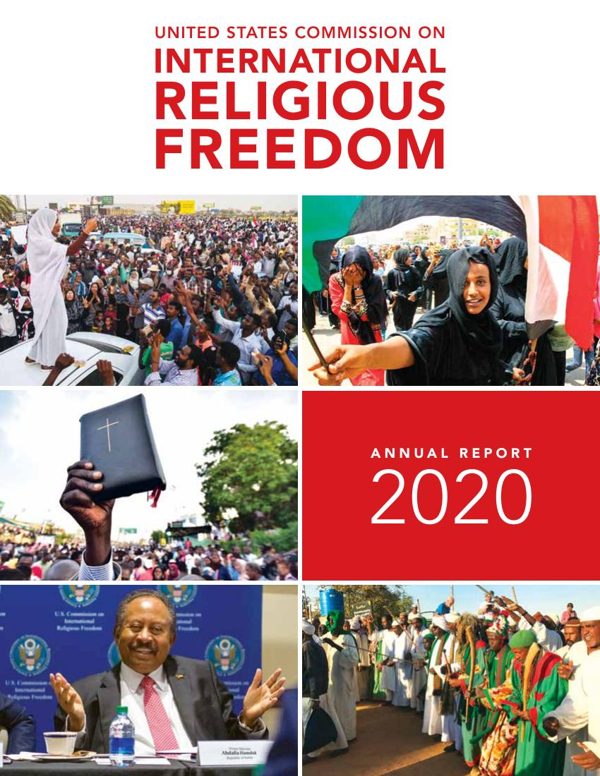
“USCIRF's 2020 Annual Report identified the defining rhetorical move of anti-cult persecution as portraying community members as ‘helpless victims without their own free will or ability to save themselves.’”
At trial, the prosecution's rebuttal closing told the jury: “Choice wasn't even part of the equation for them. Choice wasn't something they were in a psychological state to even consider, and that means they could make no reasonable choice.”
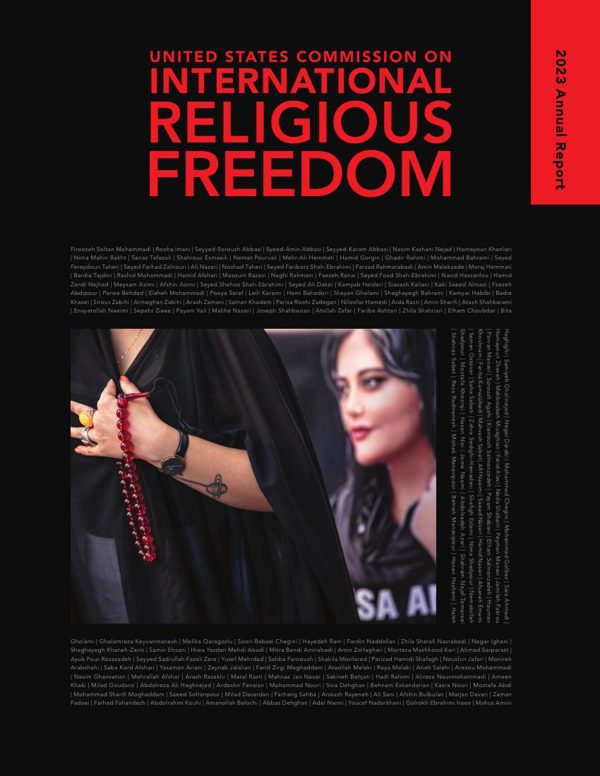
“USCIRF's July 2023 Issue Update criticized France's About-Picard law — which criminalizes ‘psychological subjection’ — and the French government's funding of the anti-cult agencies behind it, as threats to religious freedom.”
“worked because they were taught that the way to enlightenment was to obey the defendants' demands.”
“USCIRF Commissioners Abraham Cooper and Mohamed Magid issued official statements condemning laws that treat ‘mental subjection’ or ‘brainwashing’ as a crime as ‘pseudo-scientific anti-cult ideology.’”
USCIRF has condemned governments in Russia, France, China, and Central Asia for using this framework. The Eastern District of New York used the same standard.
This is not a theoretical risk. The federal government has named religious organizations as targets, argued that their institutional authority provides no legal protection, and embedded the diagnostic tool for identifying them into federal training.
Part E — International Religious Freedom Scholars: “Brainwashing Returns Through Trafficking Laws”
On June 27, 2026, CESNUR — the Centro Studi sulle Nuove Religioni, one of the world's leading academic centers for the study of new religious movements — published a public memorandum endorsed by 20 named scholars and legal experts documenting the same pattern this page describes: the misuse of anti-trafficking laws, powered by brainwashing rhetoric, to target religious and spiritual communities.
The memo was authored by Dr. Massimo Introvigne and published in Bitter Winter, the international journal on religious liberty and human rights.
Key findings:
“These cases often rely on discredited theories of ‘coercive persuasion’ or ‘brainwashing,’ rejected decades ago by scholars and courts as pseudo-scientific. Yet they are now re-entering legal systems through trafficking legislation, creating a risk that normal religious, spiritual, or volunteer activities may be misinterpreted as slave labor or criminal conduct.”
“The first-degree decision [in the OneTaste case] created alarm in the legal community because it marked the first time in U.S. federal case law that a forced-labor conviction rested entirely on psychological coercion theories without physical coercion.”
“Once psychological coercion becomes an accepted basis for trafficking prosecutions, any religious or spiritual community can be targeted. The content of a group's teachings becomes secondary. What matters is the model used to interpret those teachings... The groups targeted today may be unfamiliar or controversial. The groups targeted tomorrow may be mainstream.”
The memorandum was endorsed by 20 scholars and legal experts. Among the signatories: Alan M. Dershowitz (Professor Emeritus, Harvard Law School), Ronald S. Sullivan (Professor, Harvard Law School), and Eileen Barker (London School of Economics, em.) — widely regarded as the founding scholar of the academic study of new religious movements.
- Alessandro Amicarelli, President, European Federation for Freedom of Belief (London)
- Eileen Barker, London School of Economics (em.)
- David Bromley, Virginia Commonwealth University (em.)
- Alan M. Dershowitz, Professor Emeritus, Harvard Law School
- Bernard Doherty, Charles Sturt University
- Willy Fautré, Human Rights Without Frontiers
- Holly Folk, Western Washington University
- J. Gordon Melton, Baylor University (ret.)
- Rebecca Moore, San Diego State University (em.)
- Susan Palmer, Concordia University
- James T. Richardson, University of Nevada (em.)
- Bernadette Rigal-Cellard, Université Bordeaux Montaigne
- Rosita Šorytė, International Observatory for the Religious Liberty of Refugees
- Ronald S. Sullivan, Professor, Harvard Law School
- Stuart Wright, Lamar University
- Peter Zoehrer, Forum for Religious Freedom Europe
The Threat
Every Community That Transmits Values With Intensity Is Now Exposed
Wherever there is hierarchy, the VCA finds structural power. Wherever there is structural power, it finds conditions that invalidate consent. Wherever consent is invalidated, it finds coercion. And wherever it finds coercion, a prosecutor finds a crime.
“Every disgruntled ex-Mormon missionary, former seminarian, or departed ashram resident potentially holds a contingency fee lottery ticket.”
“As soon as I saw the indictment, I realized that with a few changes of words, this indictment could have been directed against Mormon groups, against Hasidic groups, against various Protestant or Catholic sects. There are so many people who join ideological or religious groups, volunteer their time and later become disillusioned. The idea that prosecutors can later say that voluntary participation must have been coercion is extremely dangerous.”
Writing in The American Conservative, former Trump administration Deputy General Counsel James Lawrence warned that the government's coercive control theory “can be readily repackaged and deployed against churches, religious institutions, or other designated enemies of the moment.”
“Evangelization becomes recruitment. Labor is extracted through church ministries. Holding others accountable for sin and instructing the faithful to avoid temptation is control.”
The statute has no limiting principle. It will be used by whoever holds it.